If you are comparing Napa winery cave experiences, here is ours in brief: Baldacci Family Vineyards operates a 19,210-square-foot working cave on the Silverado Trail in the Stags Leap District. The cave tour runs 15 to 20 minutes, includes a barrel tasting of Cabernet in the middle of its aging, and is followed by a seated tasting. Reservations are required.
Most descriptions of cave tastings in Napa reach for the same words: atmospheric, intimate, magical. Those descriptions are not wrong, but they’re missing the more interesting point. The cave isn’t set design. It’s infrastructure. The wine that goes into a barrel in Baldacci’s cave on a September morning is going to spend 22 months in that space before it sees a bottle. The temperature stays between 59 and 60 degrees every day of those 22 months, in July and in January, regardless of what’s happening in the vineyard above. That consistency is the point. That’s what the cave is for.
The aesthetic of a cave, the low light and the cool air and the rows of barrels, is a side effect of the geology. It happens to be beautiful. But the reason the cave exists is purely functional and understanding that function is the most useful thing about visiting one.
When visitors come through our cave, they’re walking through a working winery, not a hospitality set. The barrels around them hold wines made from fruit grown a short distance away. When we pull wine from barrel during the tour, the wine you taste is in the middle of its transformation. It doesn’t taste like the wine in the bottle yet. It tastes like what the wine is still becoming.
How Baldacci’s Cave Came to Be
We built the first half of the cave in 2003. For nearly two decades it served one purpose: barrel storage. Temperature-stable, humidity-controlled, underground storage for the wines we were aging in French oak barrels. That was the whole brief.
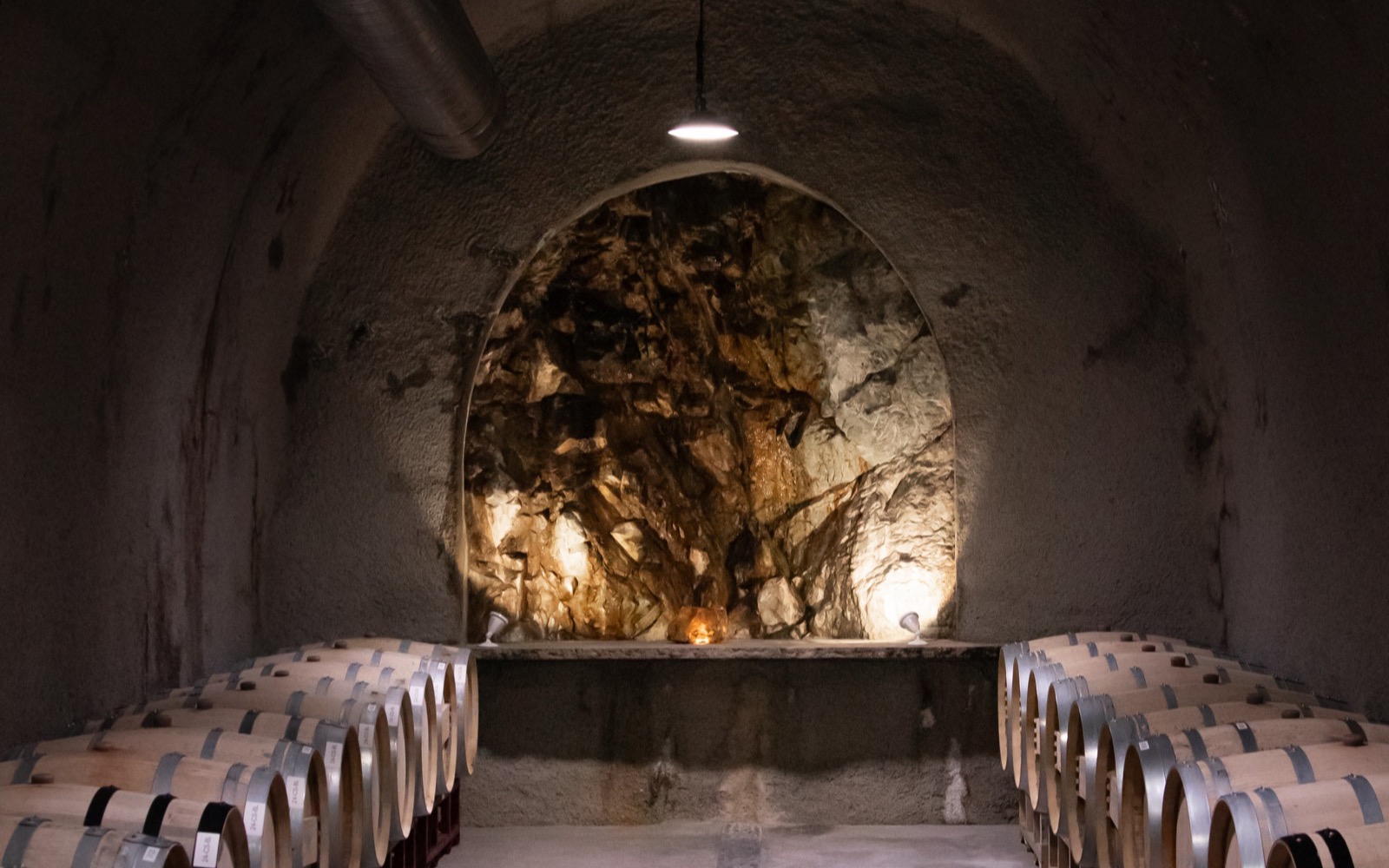
In 2021 we completed a significant expansion. The cave now holds our full wine production operation: grape receiving and sorting, fermentation, pressing, and barrel aging all happen underground. Moving winemaking into the cave was a deliberate choice. Keeping the wine in one consistent environment from fermentation through barrel aging removes one more variable from the process. The fruit comes in, ferments, presses, and goes into barrel, all at the same steady 59 to 60 degrees. The expansion also gave us the infrastructure to bring visitors in properly. What you tour now is not a repurposed storage facility dressed up for hospitality. It’s a working winery cave, from fruit delivery through fermentation and into barrel.
The cave holds just under 500 barrels. The temperature runs 59 to 60 degrees year-round, maintained passively by the earth above and below. There’s no mechanical refrigeration doing that work. Geology does it.
Why the Cave Matters for the Wine
Here’s the functional reason caves exist: Cabernet Sauvignon and other wines aged in barrel need time, and what happens to the wine over that time is affected by temperature. Consistent, stable temperatures allow for slow, controlled development. Temperature fluctuation pushes and pulls the wine, causing it to expand and contract through the barrel stave and accelerating the aging process in ways that tend to work against the wine rather than for it.
A barrel in a standard warehouse might see temperatures from the high 40s in winter to the high 70s in summer. A barrel in our cave sits at 59 to 60 degrees in October and 59 to 60 degrees in August. That consistency is not a small thing over a 22-month aging period. It’s the difference between a wine that develops on its own schedule and one that’s being pushed by its environment.
The humidity underground also matters. High cave humidity reduces the rate of evaporation through the barrel stave, which means less wine lost to the “angel’s share” over the course of barrel aging, and more control over how the wine concentrates. Both the temperature and the humidity are natural conditions of being below ground, not systems we’re managing actively. The cave creates the right conditions and then stays out of the way. That’s the whole point.
Whether you can taste the difference is a harder question to answer definitively, but my answer is yes. Wine aged in consistent underground conditions develops differently than wine aged in a temperature-variable environment. The tannins integrate more slowly and more completely. The oak contribution weaves in rather than sits on top. Whether that’s the cave specifically or the combination of the cave and everything else we do, I can’t fully separate. But I wouldn’t move the operation out of it.
What to Expect from the Cave Tour and Barrel Tasting
The tour runs 15 to 20 minutes. You’re escorted through the working cave, past the fermentation vessels and the barrels, seeing where the wine is made and where it lives during its 22-month aging period. This is not a tasting room we moved underground. It’s the space where the wine is produced, and we share it with our visitors.
During the tour, we pull wine from barrel. The wine in the barrel is always from our Stags Leap District vineyard, which means it’s going to become one of two wines: the Black Label Cabernet Sauvignon or Brenda’s Vineyard, depending on the lot and the vintage. The wine you’re tasting will be somewhere between 6 and 18 months into its barrel aging phase, depending on where we are in the harvest calendar.
What you’re tasting from the barrel is the wine in its working state. It’s not finished. It’s not blended. It tends to be more tannic, more raw, and more immediately present than the bottled version will eventually be. That’s the point of the barrel tasting: it puts the process in context. When you sit down in the tasting room after the cave tour and open a finished Baldacci Cabernet, you have something to compare against. You know what the wine looked like at month twelve or fifteen. The gap between those two things is what 22 months in a cave at 59 degrees does.
It also answers a question I get at the tasting table more than almost any other: what does the wine taste like before it’s finished? Most people have never had a chance to know. The barrel tasting is the answer.
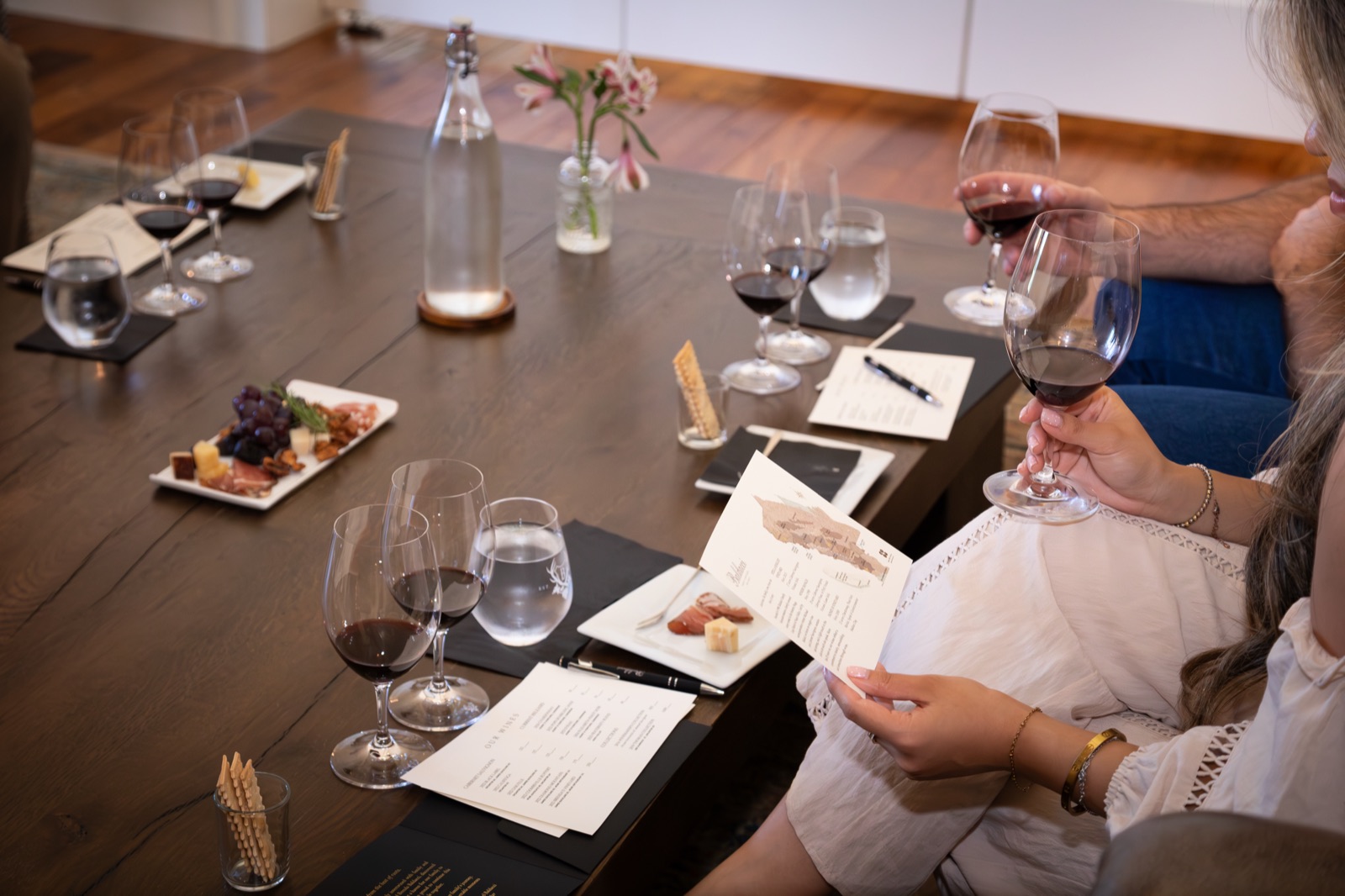
The cave portion is followed by a seated tasting in the tasting room. The cave tour is where you see and taste the process. The tasting room is where the conversation about the finished wines happens. Both are part of the same visit.
Reservation required. This is not a walk-in experience, and the cave operates at limited capacity.
Other Napa Wineries With Cave Experiences
There are roughly 65 Napa Valley wineries with caves, a number that reflects both the geology of the valley (hillsides that can be excavated into stable, temperature-stable environments) and the economics of aging high-value wine. Building a cave is a significant infrastructure investment. The wineries that have them are generally committed to barrel aging their wines at a serious level. Not all of them offer public tours. The ones that do tend to structure the experience differently. A few worth knowing if you’re building a Napa itinerary around cave experiences:
Del Dotto Historic Winery and Caves has made the cave tour the centerpiece of their hospitality program. Their hand-dug historic caves are among the more extensive in the valley, and the barrel tasting format is well-established. The experience there is more theatrical in character than what we offer at Baldacci, which is a different thing to offer but not a lesser one. For visitors who want the dramatic cave experience as the main event, Del Dotto is the obvious name.
Beringer Vineyards has limestone caves that were dug in the 1870s, making them among the oldest continuously used wine caves in California. They’re part of the broader Beringer estate experience and carry the weight of that history. If the historical dimension is what draws you, Beringer is the right stop.
Darioush is on the Silverado Trail and known for a high-end cave experience integrated with its larger hospitality program. The caves sit alongside the winery’s distinctive Persian-influenced architecture. For visitors looking for a more formal, polished setting alongside a cave experience, it’s worth visiting.
Each of these is a different version of the same underlying experience: access to the underground part of a working winery, and a chance to taste wine in a context that most people don’t encounter at a standard tasting room. What they share is the temperature and the barrels. What differs is everything else.
Baldacci is on the Silverado Trail in the Stags Leap District. The cave tour here is designed around one thing: understanding our belief that a stable environment that is naturally maintained creates wines of distinct expression. Our cave tour is not a theme park ride, it’s a behind the curtain view of how we create wine.
Planning Your Cave Visit
Cave tours at Baldacci are by reservation. Because the cave is a working space and group capacity is limited, advance booking is required. The tour is offered as part of a broader, private tasting experience: cave tour and barrel tasting first, then a seated tasting in the Estate House.
For couples, small groups, or anyone for whom a Napa trip is a significant occasion, the private cave tour is the right format. It’s personal, unhurried, and specific to this property in a way that standard tasting formats aren’t. You’re not going to have this conversation about this wine anywhere else, because the wine lives here.
If you want the fully private version of a Napa visit, our guide to private wine tastings in Napa Valley covers the formats, what they cost, and how to book them.
The best time of year for a cave tour is also the most straightforward answer: any time. The cave doesn’t change with the season. The temperature inside is the same in February as it is in August. The barrels are always present. The experience is the same regardless of what’s happening outside, which is part of the point.
A practical note for first-time cave visitors: the temperature inside is 59 to 60 degrees year-round. That’s noticeably cool compared to a Napa Valley afternoon, especially in summer when it might be 90 degrees outside. Bring a layer if you’re sensitive to cold or if you’re visiting during the warmer months. It’s not cold in any extreme sense, but the contrast is real and most visitors notice it within the first few minutes. That temperature differential is, of course, the entire reason the cave exists.
Most of the wine aging in those barrels goes to our allocation members first. If you taste something in the cave you want to own, this is the way to do it.
Book your cave tour at Baldacci →
FAQ
What wineries in Napa have caves you can tour? Roughly 65 Napa Valley wineries have wine caves, though not all of them offer public tours. Wineries with established cave tour programs include Baldacci Family Vineyards, Del Dotto Historic Winery and Caves, Beringer Vineyards, and Darioush. Each structures the experience differently. Baldacci’s cave tour walks visitors through a working cave, including a barrel tasting of Cabernet from its Stags Leap District vineyard somewhere in the middle of its 22-month aging process.
What is a cave tasting like? At Baldacci, the cave experience is a tour rather than a seated tasting: a 15 to 20-minute walk through the working cave, where we make wine and age it in barrel. During the tour, wine is pulled directly from barrel with a wine thief. The wine is unfinished, somewhere between 6 and 18 months into barrel aging, and it tastes noticeably different from the bottled wine: more structured, more tannic, still resolving. The cave tour is followed by a private, seated tasting in the Estate House, where the finished wines are poured.
Which Napa wineries do cave tastings? Del Dotto, Beringer, Darioush, and Baldacci Family Vineyards all offer cave experiences that include barrel tastings. Del Dotto is the most well-known for making the cave tasting its signature format. Beringer’s historic caves are among the oldest in California. Darioush offers a high-end cave experience on the Silverado Trail. Baldacci’s cave tour is a working winery experience in the Stags Leap District, combined with a seated, private tasting in the Estate House.
Where can I do a cave tasting on the Silverado Trail? Baldacci Family Vineyards and Darioush are both on or adjacent to the Silverado Trail and offer cave experiences. Baldacci’s cave tour walks visitors through a working cave winery in the Stags Leap District, with a barrel tasting included followed by a private, seated tasting in the Estate House. Reservations are required at both wineries.
Why do Napa wineries have caves? Caves provide ideal conditions for barrel aging wine. The temperature underground at Baldacci stays between 59 and 60 degrees Fahrenheit year-round without mechanical refrigeration. That consistency prevents the temperature swings that stress wine during barrel aging and can accelerate development in ways that work against the finished product. The humidity underground also reduces evaporation through the barrel stave. Both conditions are natural results of being below ground. Caves were used for this purpose in European wine regions long before Napa built them, and they remain one of the most effective passive solutions to barrel aging temperature control.
Are cave tastings in Napa worth it? That depends on what you are looking for. A cave tasting at Baldacci is a more specific and educational experience than a standard tasting room visit. You see the working infrastructure of a winery, taste wine that is still in development, and form a clearer picture of what you are drinking in the Estate House afterward. It is worth it if you want depth, context, and something you will not find at a standard tasting bar.
How much does a cave tasting cost in Napa? Pricing varies by winery and format. Cave tastings tend to be priced above standard tasting room visits, reflecting the more involved format and limited group capacity. For current Baldacci cave tour pricing and availability, the booking page has the most up-to-date information.
Do you need a reservation for a cave tasting in Napa? Yes. At Baldacci and most Napa wineries with cave tours, prior reservations are required. Cave capacity is limited and the tours are run as private experiences. Walk-ins are not available. Booking 1 to 2 weeks ahead works for most of the year. For harvest season, September through November, booking further in advance is recommended.
How long does a cave tasting last? The Baldacci cave tour itself runs 15 to 20 minutes, followed by a private, seated tasting in the Estate House. Plan for approximately 90 minutes total for the full experience.
What is the temperature inside a Napa wine cave? Napa wine caves typically maintain a temperature of 55 to 60 degrees Fahrenheit year-round, controlled passively by the surrounding earth. At Baldacci, the cave temperature stays between 59 and 60 degrees in every season. That stability is the functional purpose of the cave: the wine ages at a consistent temperature without mechanical refrigeration.
Michael Baldacci is the winemaker at Baldacci Family Vineyards, Stags Leap District, Napa Valley.